Technology
Two doors.
One owner.
Twin spring doors seal the trigger well. Your fingerprint opens them in under three-tenths of a second, before your sights are up. And if every circuit dies, the mechanics still answer to you, and only you.
The mechanism
01Seal
The well closes.
Twin spring doors close over the trigger well, adding 2.0mm per side. That is thin enough to holster with the lock installed, and enough to keep everything off the trigger, including its owner, until the owner decides otherwise. Sealed is the resting state. Being safe takes no thought at all.
02Touch
One deliberate touch.
Your fingerprint is matched on a sealed module inside the lock. Prints never leave the device. There is no radio, no app, and no network, so there is nothing to pair, nothing to update, and nothing to intercept. The lock knows one thing: whether the finger on it belongs to its owner.
03Open
Before your sights are up.
The match runs during the draw, at first grip contact, so on a match the doors spring clear before the gun is level. The doctrine matters here: you can draw and present without arming. The draw shows force. The touch arms. The decision to fire stays a human decision, made deliberately, not by default.
04Holster
Holstering re-locks it.
As the pistol seats, the holster mouth presses the doors shut. Re-locking is automatic and mechanical. There is no button to press, no menu to find, and no step to forget at the end of a long night. De-escalate, holster, secured.
The release path
Watch the logic fire.
This is not a video. The lock's own state machine is running in your browser, in real time. Your grip wakes the sensor, the print is matched on a sealed module during the draw, and only then does a single ~1.5A pulse from a boosted rail pull the pawl clear and let the springs swing the doors open. Under three-tenths of a second, every step causal. The lock is open before your sights are up.
Specifications
What we will put in writing.
| Profile | 2.0mm added per side. Holsterable while installed. |
|---|---|
| Unlock | Under three-tenths of a second from touch to open, worst case. The match runs during the draw, so perceived latency is zero on a real defensive draw. |
| Authentication | Fingerprint, matched on a sealed module. Prints never leave the device. |
| Fail state | Fail-open. Mechanical release. A dead battery never denies the owner. A child cannot operate it. |
| Re-lock | Automatic on holstering. |
| Connectivity | None. No radio, no app, no network. |
| Power | CR2450-class replaceable cell. Years of standby. |
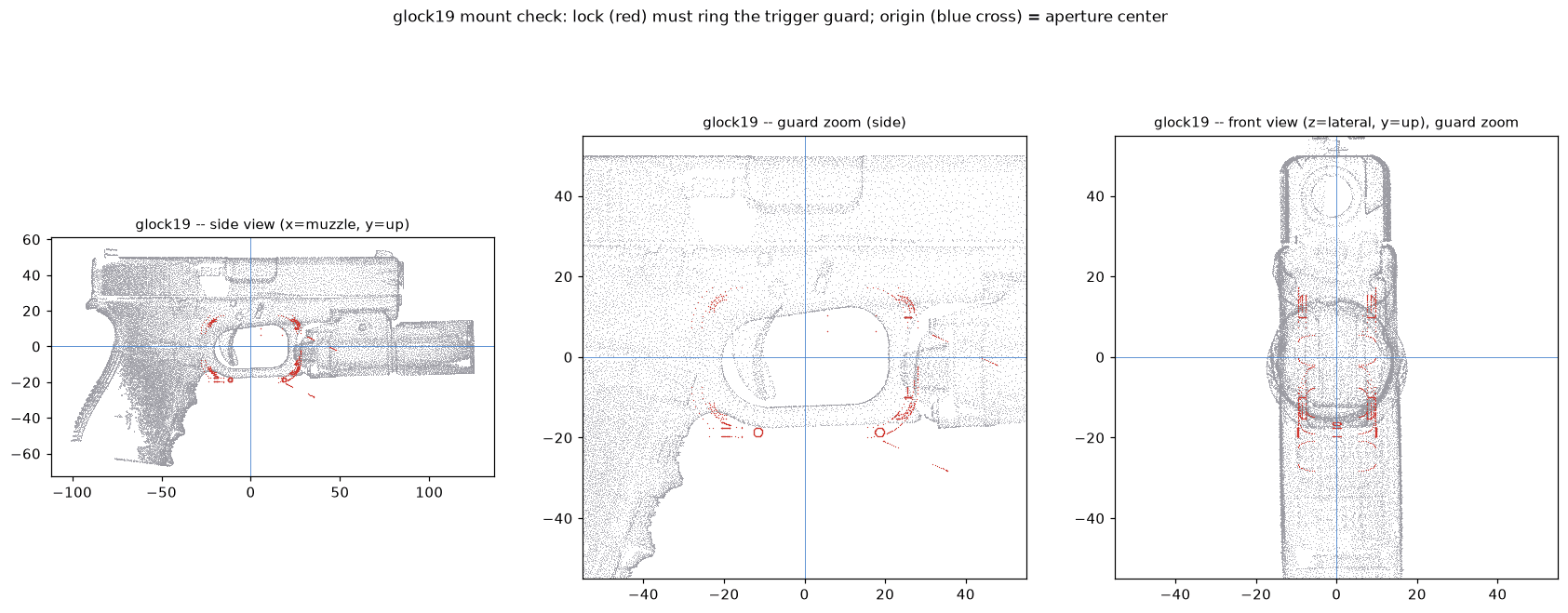
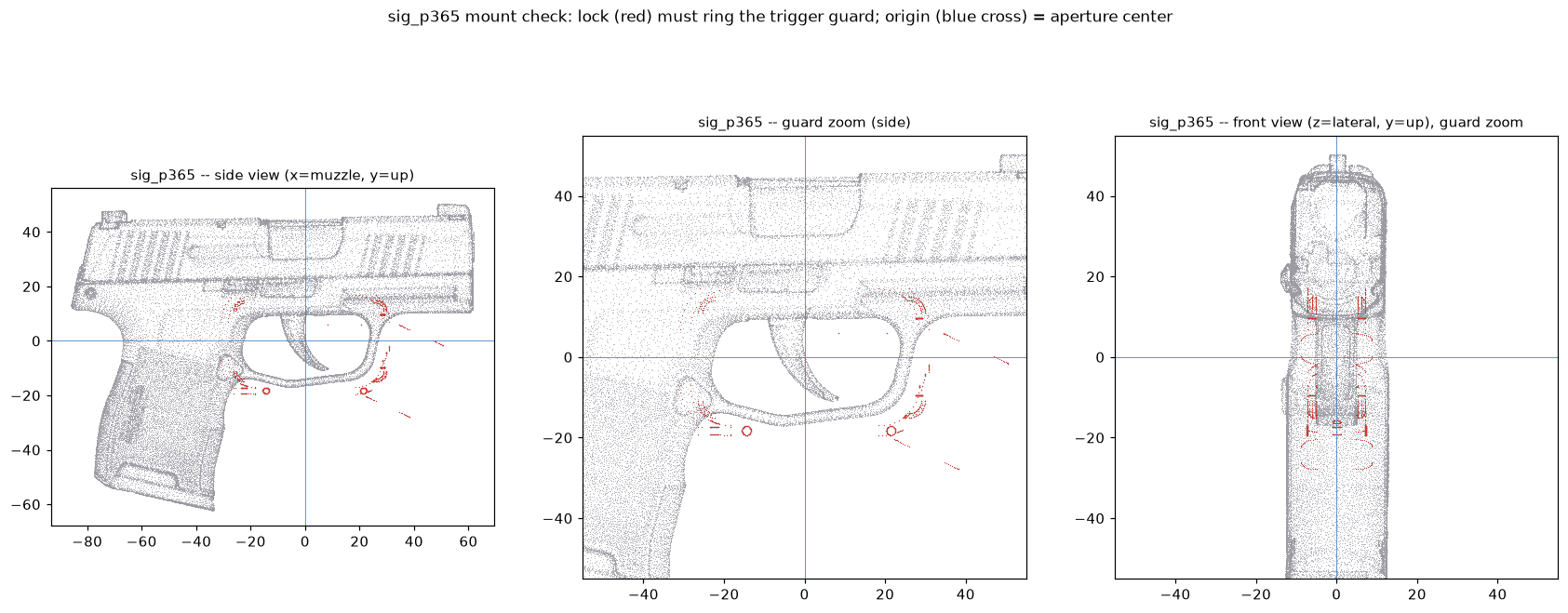
| Fitment | 22 pistol platforms measured via structured-light scans. |
| Door SKUs | 4 families. 3 cover mainstream striker-fired pistols. |
| Patent | Patent work in progress. |
Engineering honesty
The hard problems, in public.
Anyone can publish a spec sheet of wins. A safety device earns trust by owning what is hard. These are the three problems we treat as make-or-break, and exactly where we stand on each.
Problem 01
Heat
A pistol left in a hot vehicle cooks. Our actuation wire is specified against a 90C requirement, and qualifying the design against that heat is open engineering work we are doing in the open. Any design change that threatens that margin loses the argument.
Problem 02
Cold
Cold changes skin and it changes sensors. Cold-weather requalification of the fingerprint sensor is planned, and we will not call this product finished until it passes.
Problem 03
False rejects
No fingerprint sensor reads perfectly every time. The module keeps reading while your finger is on it, so a smudged first read means a retry, not a lockout. And the mechanical release sits underneath it all, because the owner is never the one locked out.
From the bench
Work shown, not staged.
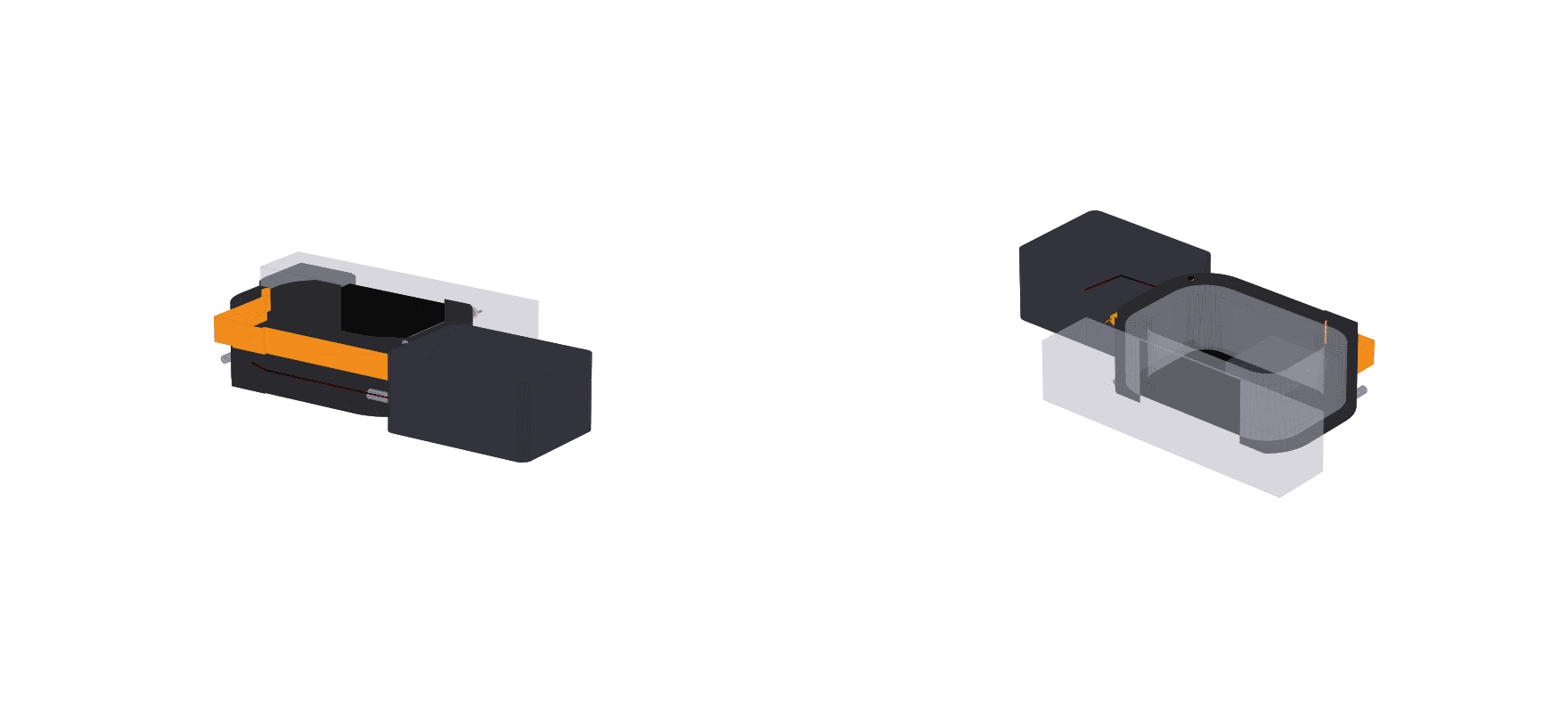
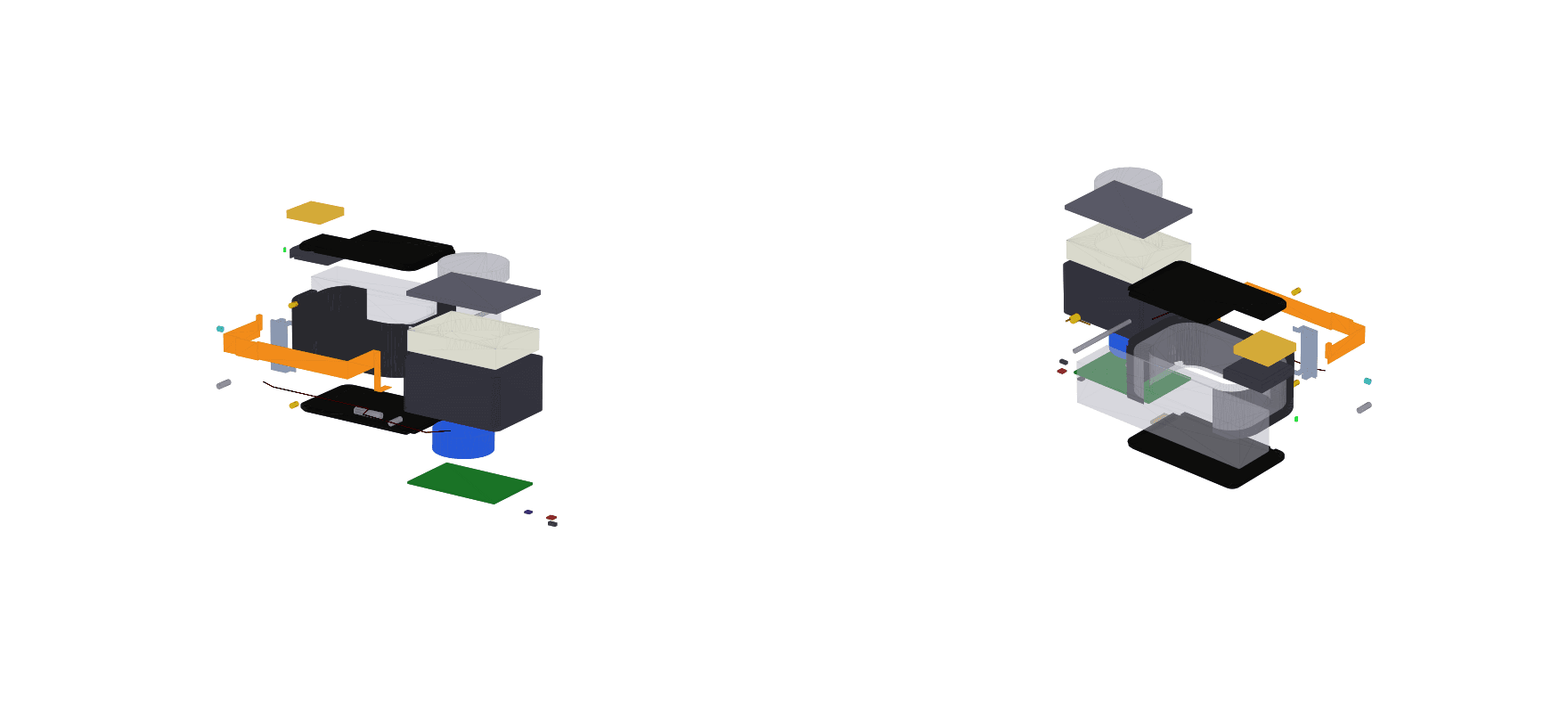
These are engineering artifacts, pulled straight from our fitment work. Renders of the internal assembly, and mount-check plots from the structured-light scans we run against every supported platform.
Early access
Hold your place.
$299 MSRP. Reserve now at the $199 founder price, with no payment. Get in line before the first production run.
Reserve yours